Meta Horizon Worlds Shutdown and the Virtual World Graveyard Pattern
Archive Entry: 003
Type: Modern History
Published: March 19, 2026
Meta renamed the whole company for the metaverse, spent roughly $70 billion chasing it, and still arrived at an ending so bleak it almost feels mean: the flagship social VR world is being removed from VR and left behind as a mobile app.
Call it the cleanest possible corporate surrender.
On March 18, 2026, Meta told Quest users that Horizon Worlds would vanish from the Quest Store on March 31 and disappear from VR entirely on June 15. The official language, posted to Meta Community Forums, was so smooth it almost looped back into comedy:
“We are separating the two platforms so each can grow with greater focus, and the Horizon Worlds platform will become a mobile-only experience.”
A company that renamed itself Meta is now explaining, with management-consultant calm, why its metaverse world no longer belongs on its own metaverse headset.
The scale is what turns this from a product update into internet history. CNBC put Meta’s metaverse spend at around $70 billion. That number matters because it moves Horizon Worlds out of the usual graveyard category of weird side project nobody used. Google can kill an odd experiment and everyone shrugs. Yahoo can abandon a half-finished social product and it barely dents the week. Meta spent years telling investors, users, employees, and the rest of Silicon Valley that this was not a side quest, but the future. This was the platform after the smartphone. This was big enough to justify renaming Facebook itself. Then the big ending is “mobile-only experience.” Thus begins one of the most expensive public walk-backs in tech history.
Why Horizon never felt easy to inhabit
Horizon Worlds always had a structural problem that Meta treated like a feature. It was hardware-gated social software. You needed people to buy a Quest headset, keep using it, decide that hanging out in VR felt natural enough to become a habit, and then choose Horizon Worlds over every other thing they could do with the device. That is a lot of asks before anyone even gets to the part where a social platform has to feel alive.
Social spaces live or die on friction. AIM worked because your friends were already on the family computer. MySpace worked because a browser tab was cheap. Discord works because opening it requires almost nothing from your body or your schedule. Horizon Worlds asked ordinary people to strap expensive plastic to their face and go spend time in a world that often looked sparse, awkward, and eerily underpopulated. Meta kept pitching this as the next social layer. The product kept feeling like an expensive errand.
Social platforms are not saved by ambition. They are saved by repeat behavior. People have to come back tomorrow, bring their friends, build rituals, and make the place feel more inhabited each month instead of more managed. Meta could subsidize hardware, pay for creator funds, flood keynote stages with demos, and still fail the basic test every social platform has to pass: does this place feel like somewhere people want to be when no one is making them.
Once Meta shifts Horizon Worlds to mobile, it is admitting the lowest-friction version was the only one with any hope of surviving. The VR layer was not the accessory. The VR layer was the thesis. A mobile-only Horizon is not the original vision made practical -it is what remains after the original vision failed.
Horizon joins a very crowded archive
Google launched Lively in July 2008 and shut it down in November 2008 with a blog post titled, with brutal little efficiency, “Lively no more.” Five months. Barely enough time to form a habit, definitely enough time to become a warning label. PlayStation Home lasted much longer, from 2008 to 2015, which gave users plenty of time to get attached before Sony closed it anyway. Sansar, Linden Lab’s follow-up act after Second Life, never became the giant successor people imagined and was sold to Wookey Projects in 2020. There.com shut down in 2010 and later returned in another form, because virtual worlds have a way of haunting the people who once believed in them.
Horizon Worlds is joining that lineage with one extra layer of embarrassment. Meta had the benefit of every previous warning. It had years of examples showing that virtual worlds are easy to launch and hard to inhabit. It had proof that users get weirdly, intensely attached to places outsiders dismiss as fake. It had the ability to study why VRChat kept feeling socially alive while Horizon Worlds kept feeling like it had been cleared by legal, brand, and an HR onboarding committee. It had money, hardware, distribution, and a captive audience of Quest owners. It still reached the same old ending: the company exits first, and the users get left holding the save file.
How “mobile-optimized worlds” says everything
WIRED quoted the company explaining that after June 15, users could keep visiting “mobile-optimized worlds” in the Meta Horizon mobile app.
Read that phrase again. Mobile-optimized worlds.
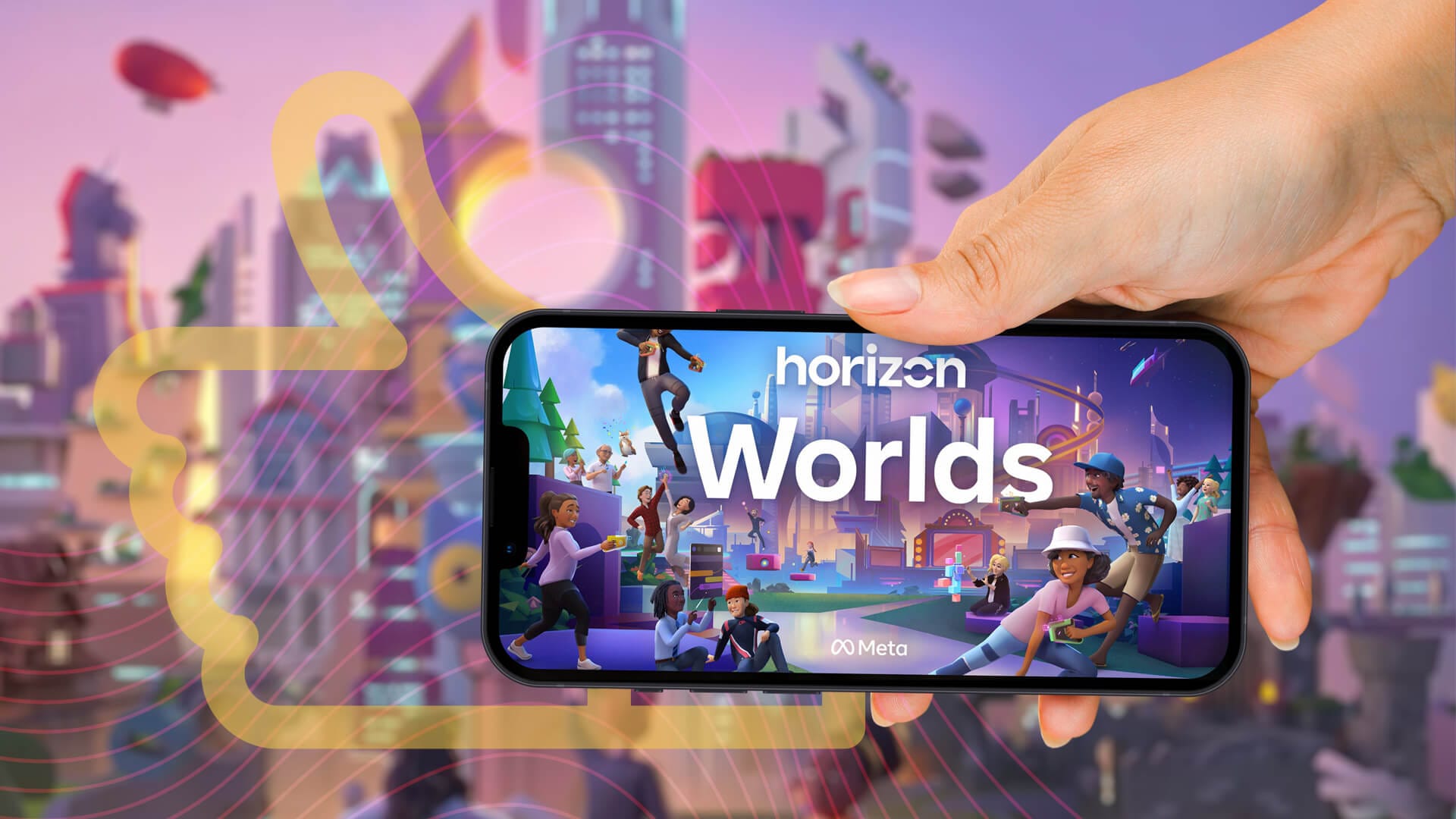
After years of headset demos, floating-leg avatar discourse, endless corporate presentations about embodied presence, and a rebrand so aggressive it became its own meme format, the landing zone is mobile-optimized worlds. It never achieved its lofty goals of being the future of human connection, the next computing platform, or the place where work, play, and identity merge in some gleaming spatial internet. It ultimately became mobile-optimized worlds. It sounds less like destiny and more like a bullet point from a panicked Q3 deck.
If Horizon continues as a phone app, it continues in the same sense a casino continues after someone rips out the slot machines and leaves the carpet.
Meta says the separation lets each platform “grow with greater focus.” Fine. Users hear something much simpler. The VR world is closing. The thing that remains is not the same place, and the contract has changed.
The users pay for the retreat
Every virtual-world shutdown hits this point eventually.
Horizon Worlds was not merely a line item in Reality Labs. It contained user-built spaces, events, purchases, routines, friend groups, inside jokes, abandoned experiments, and the small repetitive labor that turns software into a place. People spent real hours there. Some of them almost certainly spent embarrassing hours there. That still counts. Time is the asset platforms are actually asking for, and once people pay in enough of it, they start building identity on top.
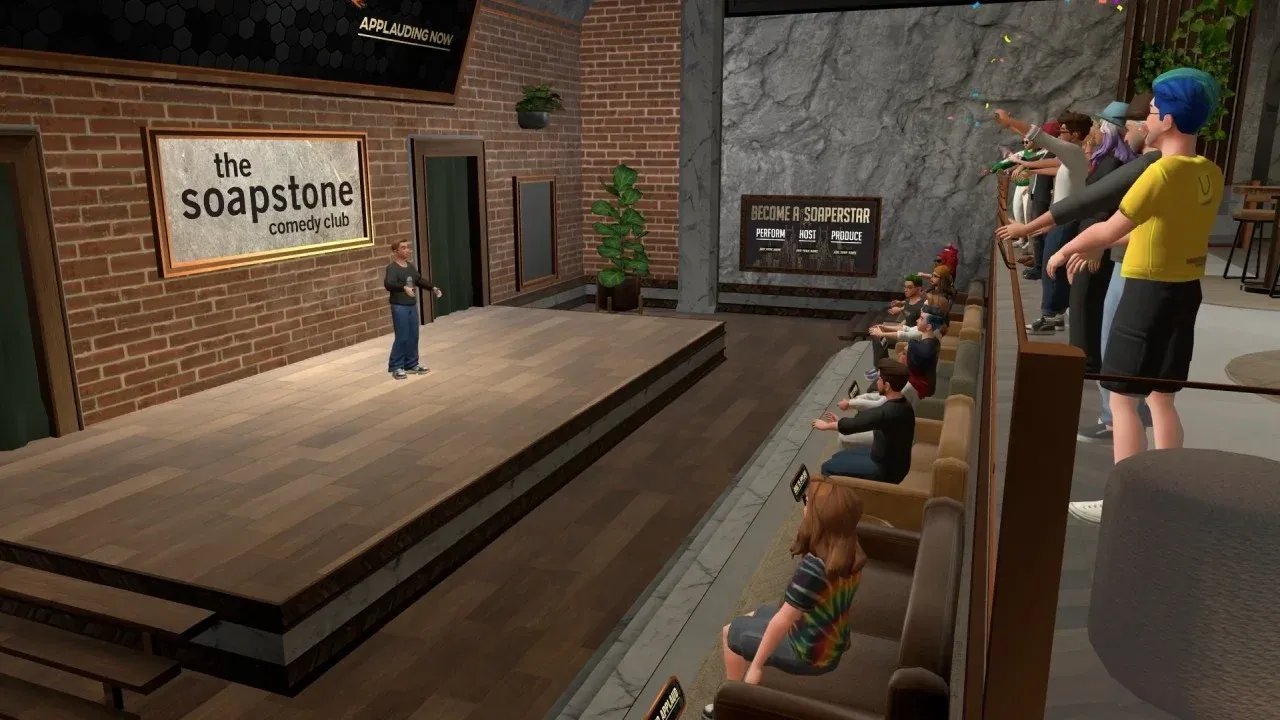
When a company changes the platform contract this dramatically, users do not simply move on. Some do. Some quit. Some follow the mobile version out of stubbornness or habit. Some discover that what looked like ownership was really a revocable license with nicer branding. Some find out that the thing they cared about was never the platform itself, but the specific configuration of bodies, devices, and rituals that made the platform feel inhabited. A world can technically survive and still die in every way that matters to the people who used it.
Shutdown notices always flatten this part. They talk about experiences, focus, transitions, support windows. The language is engineered to make a social loss sound like a product refinement. But a surviving app is not the same thing as a surviving world. If your community existed in VR, and the company removes the VR layer, then the company did not preserve your community. It preserved a brand container and asked you to be grateful.
Old platform closures leave behind weirdly intense emotional residue for a reason. People made friends there, built routines there, spent money there, and tied pieces of their identity to places a company could delete with one forum post. The screenshots look silly to outsiders. The memories do not feel silly to the people in them.
Seventy billion dollars later, same ending
Horizon Worlds leaves behind a very expensive proof that social reality does not respond well to executive declarations. You can manufacture hardware, subsidize creators, rename the company, and spend years insisting that the headset era is here. None of that guarantees a world people want to inhabit.
Meta managed to reproduce an old genre of ending on a spectacular budget. Google Lively lasted five months. PlayStation Home made it to 2015 and still closed. Sansar got sold. There.com shut down and later returned in another form. Meta had more money, more hardware control, and more distribution than any of them. It still wound up posting the same kind of retreat notice, only with better PR language and a much uglier price tag.
Horizon’s shutdown lands as a historical moment for a simple reason. It is not only that Meta failed. Big companies fail all the time. Meta failed in a way the internet had already documented repeatedly. The warning label was on the box. Corporate virtual worlds struggle to create durable social life, and when they collapse, users are the ones who absorb the loss. Meta looked at that history and decided scale would solve it.
June 15 is when the user questions start
June 15 is where the keynote language dies and the practical questions start.
Can Horizon creators still access the spaces they built in any form they recognize? Do purchases carry over into the mobile shell in a way that feels usable, or just technically accounted for? What happens to events that depended on VR presence, on embodiment, on the dumb but real feeling of being somewhere with other people wearing headsets at the same time? Can friend groups that formed in Horizon do anything with a mobile-only remnant besides stare at the wreckage and try to decide whether starting over elsewhere is worth the emotional paperwork?
That is the legacy of every dead virtual world: the people inside the platform scrambling to salvage anything that still feels like theirs.
Meta had every possible advantage and still arrived here: a calm forum announcement, a few cutoff dates, and a future of mobile-optimized worlds. That phrase should be framed somewhere, maybe next to the old “Lively no more” post, as a tiny museum of how corporations narrate retreat.
From Lively to PlayStation Home to Sansar to Horizon Worlds, the pattern is not subtle. The company exits first. The users keep whatever screenshots they remembered to save.
Sources cited
- Meta Community Forums, “Updates to Your Meta Quest Experience in 2026”
https://communityforums.atmeta.com/blog/AnnouncementsBlog/updates-to-your-meta-quest-experience-in-2026/1369435 - CNBC, “Meta is shutting down VR social platform Horizon Worlds in further pivot away from the metaverse”
https://www.cnbc.com/2026/03/18/meta-horizon-worlds-metaverse-vr.html - WIRED, “Meta Is Shutting Down Horizon Worlds on Meta Quest”
https://www.wired.com/story/meta-is-shutting-down-horizon-worlds-on-meta-quest/ - Official Google Blog, “Lively no more”
https://googleblog.blogspot.com/2008/11/lively-no-more.html - Eurogamer, “PlayStation Home is shutting down next year”
https://www.eurogamer.net/playstation-home-is-shutting-down-next-year - Ryan Schultz, “Linden Lab Has Sold Sansar to Wookey Project Corp.”
https://ryanschultz.com/2020/03/24/linden-lab-has-sold-sansar-to-wookey-projects-inc/ - UploadVR, “Linden Lab Sells Sansar To Wookey Project To 'Streamline' Focus On Second Life”
https://www.uploadvr.com/linden-lab-sells-sansar-focus-second-life/